• Shopping Cart Shopping Cart
    0Shopping Cart
Save a Little Life
  • HOME
  • ABOUT
    • SAVE A LITTLE LIFE
    • OUR TEAM
  • CLASSES
    • CERTIFICATION CLASSES
    • NON-CERTIFICATION CLASSES
    • CLASES EN ESPAÑOL
    • VIRTUAL CLASSES
  • FAQ
  • CALENDAR
  • GALLERY
  • SAFETY CORNER
  • SHOP
  • RESOURCES
  • CONTACT
  • Menu Menu

Tag Archive for: Sleep

Parenting

FROM DREAMS TO DIAPERS

Becoming a parent is one of life’s most profound transitions. During pregnancy, many people imagine what life with their baby will be like—wondering who their child will resemble, what their personality might be, and how family life will unfold.

Yet once the baby arrives, the reality of caring for a newborn often brings unexpected emotions, challenges, and learning experiences. The early days of parenthood are filled with both joy and uncertainty as parents adjust to new responsibilities, shifting identities, and the unique needs of their baby. This journey is not about perfection, but about growth, patience, and learning together. One day, one moment, and one diaper at a time.

You’ve come along way since giving birth. Take a moment to appreciate the incredible experience you have gone through and give yourself credit. Intellectually you knew parenthood was coming—having read books, taken classes, preparing the nursery, and researching baby names and all the baby gear.
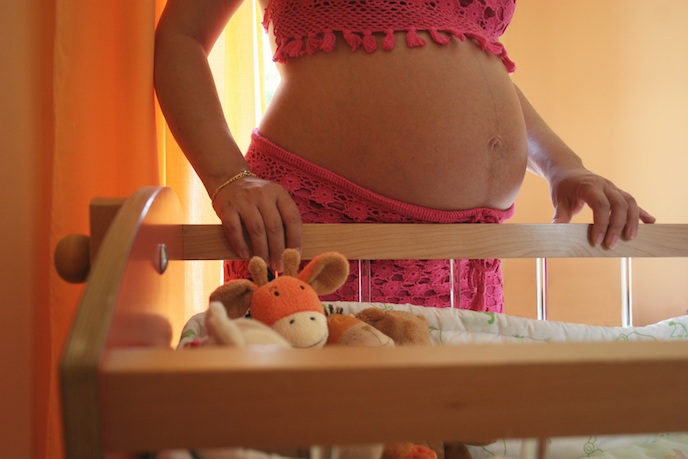
Yet, even with preparation, the day-to-day reality of caring for a newborn is often very different from what was imagined. Crying, sleepless nights, and constant care can trigger strong emotions. Parents can feel helpless, frustrated, isolated, anxious, or unsure of themselves when their baby will not settle.

In reality, crying and cueing are a baby’s primary ways of communicating, and learning to understand this new “language” takes time and patience. It is normal to experience moments of doubt, disappointment, or even guilt.

Modern life adds extra pressure. Many parents are used to completing tasks quickly and efficiently, expecting immediate results. In the early days of parenthood, time feels different. Days can pass in a blur, leaving parents wondering where the time went. It is common to hear new parents, say, “The time just flew by.” or “I didn’t even have time to shower.” Remember: your baby does not notice small imperfections—a crooked diaper or an unfinished nursery matters far less than providing nurturing, comfort, safety, and a secure attachment.
Mindfulness and flexibility are essential for well-being. You and your partner may approach tasks differently, and that is okay. There is more than one way to soothe a baby, swaddle, or manage daily routines. Respecting each other’s strengths, and differences can create harmony and balance. Parenting is not about being right or perfect—it’s about learning, growing, and supporting each other along the way.
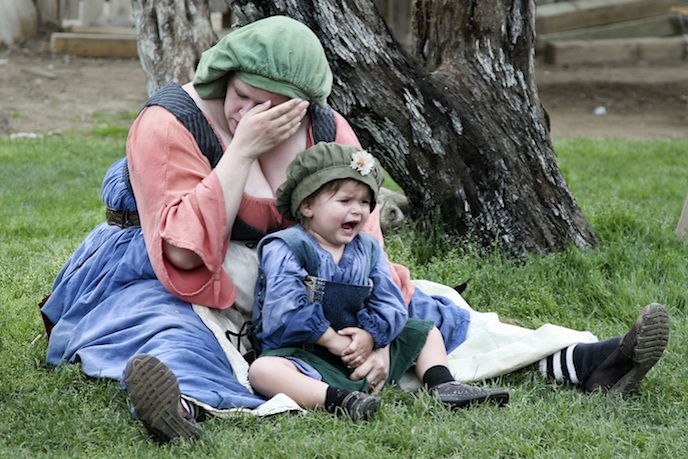
Some days will feel overwhelming, which is a common experience for new parents. When frustration arises, pause, take a breath, and take things one step at a time. Be gentle with yourself. This is a great time to practice self-compassion. Expect to make mistakes—this is part of learning. As your baby grows, new milestones will bring new challenges, and you will continue learning together.

Parenthood is the journey of learning, growth, and connection. With patience, humor, gratitude, and the practice self-compassion, you and your partner can face the challenges, celebrate the small wins and everyday joys, and build a secure, loving bond with your baby—one day, one moment, and yes, one diaper at a time!

Along the way, you may come to realize that the life you are creating together as a family—filled with countless little miracles, love, laughter, and gratitude—becomes the extraordinary dream you never knew you had.
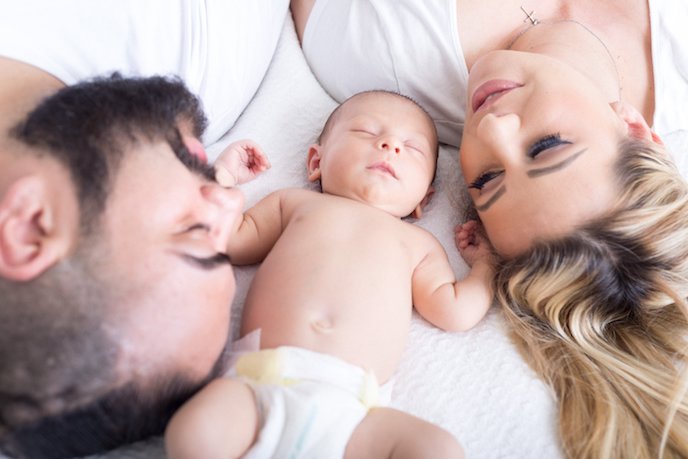
If you have any concerns about your baby’s well-being, reach out to your pediatrician.

If you or your partner are persistently overwhelmed, anxious, or down, please reach out to your healthcare provider—support is available and you do not have to face this alone.

Helpful resources include:

Postpartum Support International

(call or text 1-800-944-4773)

or visit www.postpartum.net

National Maternal Mental Health Hotline

(1-833-TLC-MAMA)

988 Suicide & Crisis Lifeline

(988)
Written by Judith Ann Aluce BSN, RN, PMH-C, author of New Baby, New Mood: How to Navigate Life With a Newborn—offering essential guidance for embracing early parenthood. Follow Judith Ann on Instagram: @newbabynewmood


May 1, 2026
https://staging.savealittlelife.com/wp-content/uploads/2026/04/shutterstock_1595121634-from-dreams-to-diapers-688x465-1.jpg 465 688 RichardP https://staging.savealittlelife.com/wp-content/uploads/2017/02/Save-A-Little-Life-logo.jpg RichardP2026-05-01 00:16:512026-05-07 12:33:34FROM DREAMS TO DIAPERS
SIDS

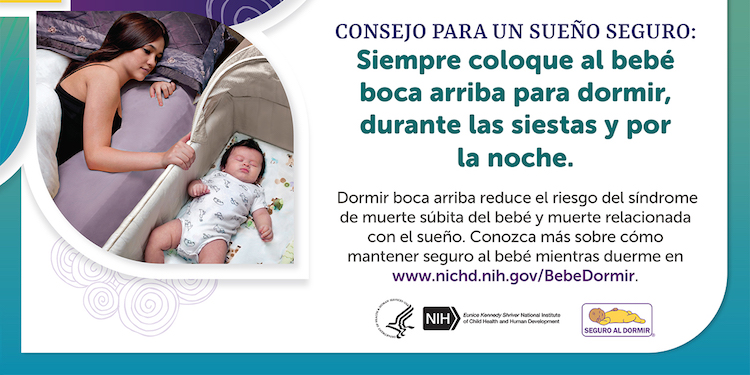
SIDS–WHY SAFE SLEEP PRACTICES MATTER

Nowadays, most first time parents are well-informed about the current guidelines regarding SIDS, but are they practicing them?

Dr. Rachel Moon, MD, FAAP is a widely-renowned pediatrician and the chair of the American Academy of Pediatrics Task Force on Sudden Infant Death Syndrome (SIDS). In her most recent study (The Tension Between AAP Safe Guidelines and Infant Sleep, Pediatrics, March 2024) we learned that most people know the ABCs of safe sleep but are not practicing them.

“If I had to follow the safe sleep back is best and nothing in the crib and no contact sleeping, I don’t think that she would get much sleep, nor would I, so I don’t feel too confident in that.” – mom from Dr. Moon’s Study

And what about the other people involved in the care of your baby – Grandparents, family members, babysitters, nannies? Even if you share what you know, cultural and generational differences can sometimes cause people to question and maybe even ignore the information.

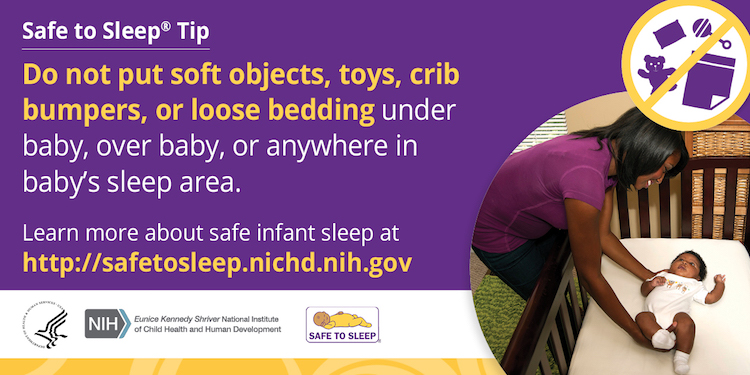
The first step towards safety is understanding why Safe Sleep practices are important. There are many resources available to help answer that question and below you’ll find videos, links, and downloads that can help.

For example, did you know…

The risk of sleep-related infant death is up to 67 times higher when infants sleep with someone on a couch, soft armchair or cushion?

Watch Charlie’s Story to find out more…

And did you know that the risk of SIDS is lower for children who breastfeed? If you’re a new parent or planning on having more children, we suggest you read our previous post Breastfeeding May Reduce the Risk of SIDS.

MUST-HAVE RESOURCES

for English and Spanish speakers (hispanohablantes)

DOWNLOADS | DESCARGAS

We highly recommend that all parents and caregivers read the article:

How To Keep Your Sleeping Baby Safe by Dr. Rachel Moon, MD, FAAP which offers excellent advice and numerous resources and practical suggestions on how to reduce the risk of SIDS.

To download a copy of the article, click here.

Recomendamos encarecidamente que todos los padres y cuidadores lean el artículo:

Cómo mantener seguro a su bebé por Dr. Rachel Moon, MD, FAAP que ofrece excelentes consejos y numerosos recursos y sugerencias prácticas sobre cómo reducier el riesgo de SMSL.

Para descargar una copia del artículo, haga clic aquí.

The NIH (National Institute of Health) has many resources available on the topic of SIDS, including videos and brochures for grandparents and other caregivers such as this video:

Video para abuelos y personas que cuidan un bebé 

Safe Infant Sleep for Grandparents and Other Trusted Caregivers

For the English version of this video click here

ADDITIONAL DOWNLOADS | DESCARGAS ADICIÓNALES


Safe Sleep For Your Baby (NIH)

Safe Sleep for Your Grandbaby (NIH)

Sueño Seguro Para Su Bebé (NIH)

Sueño Seguro Para Su Nieto (NIH)


For more in-depth info, please visit:

NIH (National Institute of Health) 

Healthy Children.org


October 4, 2024
https://staging.savealittlelife.com/wp-content/uploads/2024/10/baby-8701906_1280-688X458.jpg 458 688 RichardP https://staging.savealittlelife.com/wp-content/uploads/2017/02/Save-A-Little-Life-logo.jpg RichardP2024-10-04 14:17:252024-10-04 17:55:30SIDS–WHY SAFE SLEEP PRACTICES MATTER
Injury Prevention

INFANT NURSING SUPPORT PILLOWS SAFETY ALERT

Infant nursing support pillows are a great concept and can provide some much needed support for a nursing mother. As comfortable as they might look, however, a breastfeeding support pillow is never a safe place for babies to sleep. To date, misusage of them have been linked to over 160 infant deaths.

In this short video pediatrician Dr. Edith Branco, MD, FAAP talks about the ins and outs of using nursing support pillows:

If you’re considering a nursing support pillow for you and your baby, be sure to follow this criteria:

Pillows designed for breastfeeding should be firm and used only during feeding.

Some breastfeeding support pillows on the market already meet the following safety standards but the CPSC (U.S. Consumer Product Safety Commission) is currently considering safety rules that would ensure that all infant pillows meet standards for firmness, air flow, positional use, and shape to prevent injury or death.

April 19, 2024
https://staging.savealittlelife.com/wp-content/uploads/2024/04/sleeping-baby-on-nursing-support-pillow.jpg 459 688 RichardP https://staging.savealittlelife.com/wp-content/uploads/2017/02/Save-A-Little-Life-logo.jpg RichardP2024-04-19 17:52:392024-04-19 18:21:25INFANT NURSING SUPPORT PILLOWS SAFETY ALERT
Child Development, SIDS

WHY TUMMY TIME IS IMPORTANT FOR INFANTS

Did you know that with all the emphasis on back sleeping, it’s very important that  infants spend a short but regular amount of time on their stomachs? This allows your baby to strengthen their shoulder, neck, back and core muscles which lay the foundation for sitting up, rolling over and eventually crawling and walking.

Parents and caregivers can start this very early, even within days of birth.  

The American Academy of Pediatrics suggests 2 or 3 tummy time sessions every day.  

Each session should only be a few minutes long.  As the infant grows and their strength improves these sessions can be more frequent and for longer periods.

For those who aren’t sure how to get started here are some suggestions that will help:

  • Try short tummy time sessions after a diaper change or after the baby wakes up from a nap
  • Prop up young babies by placing a rolled-up towel or small blanket under their arms and chest
  • To encourage play, put toys or a small mirror within baby’s reach to enable them to interact with their surroundings
  • Join your baby on the floor at their eye level and interact with them by singing, holding objects and talking to them
  • Tummy time can also occur when an adult is on their back and baby is lying on them or across the parent’s lap

All family members can participate in tummy time, including grandparents, or older siblings as long as an adult is watching.

These moments not only encourage growth and development but also offer a change from the safest sleeping position…on their backs.

March 30, 2023
https://staging.savealittlelife.com/wp-content/uploads/2023/03/save_a_little_life_why_tummy_time_is_important_for_infants_3268264_1920_amyelizabethquinn.jpg 448 672 RichardP https://staging.savealittlelife.com/wp-content/uploads/2017/02/Save-A-Little-Life-logo.jpg RichardP2023-03-30 12:29:082024-10-04 14:25:32WHY TUMMY TIME IS IMPORTANT FOR INFANTS
Automobile Safety, Injury Prevention

THE BIGGEST MISTAKE YOU CAN MAKE WITH A CAR SEAT

The American Academy of Pediatrics (AAP) wants parents to know that sleeping in their car seats when not in transport has significant risk and has caused an alarming number of deaths nationwide.

Dr. Jeffrey Colvin, the lead author of a study looking at risk for infants in car seats, found that “most of the deaths occurred when the car seat was being used as a sleeping device.” He further noted “It really appears that the deaths in these car seats occurred in the context where the car seat wasn’t being used for its purpose in transporting a child, but instead it was being used as a substitute for a crib or bassinet.”

The AAP study further noted that “compared with other deaths, deaths in sitting devices had higher odds of occurring under the supervision of a child care provider or babysitter (our italics) compared with a parent.”

Dr. Colvin told Today that while there is no definitive reason for the number of deaths in car seats, he suggested the angled position of the device might be a factor, as well as the straps and side padding that could potentially be a strangulation or suffocation risk. He also stressed that “before there is widespread panic every time a child falls asleep in a car seat, parents should absolutely not be concerned if their baby falls asleep during the usual time in transit.” Various experts have opinions as to how long it is safe for them to be sleeping during a car trip. Please discuss this with your pediatrician for their expert advice.

December 9, 2022
https://staging.savealittlelife.com/wp-content/uploads/2022/12/car-seat-in-the-house-by-glamamom-650x488-1.png 488 650 RichardP https://staging.savealittlelife.com/wp-content/uploads/2017/02/Save-A-Little-Life-logo.jpg RichardP2022-12-09 18:00:252022-12-09 18:00:25THE BIGGEST MISTAKE YOU CAN MAKE WITH A CAR SEAT
Automobile Safety

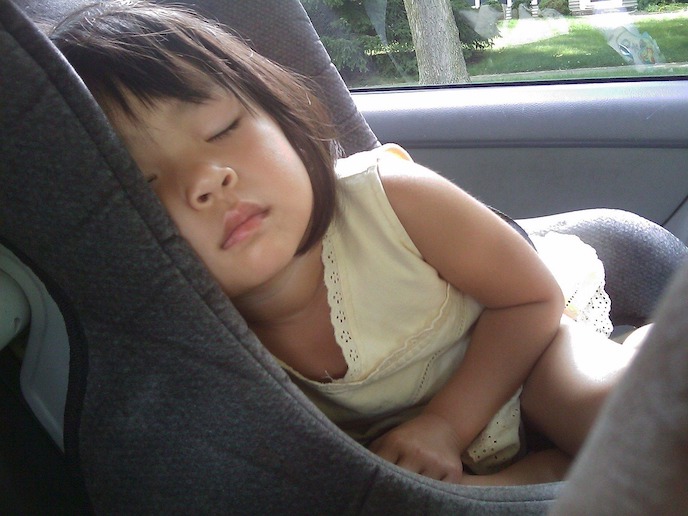
IS CAR SEAT SLEEPING DANGEROUS?

We’re all accustomed to seeing infants and toddlers nod off when traveling in a car. The question is, how safe is it?

Although their car seat is angled back a bit, you will have noticed that when they fall asleep their heads inevitably fall forward. This is considered to be safe since the amount of pressure on their airway isn’t sufficient to stop breathing.

That being said, safety experts have known for some time that prolonged sleep in a car seat poses the risk of impaired breathing. This is due to the amount of pressure that the infant’s head puts on the breathing passage in a “hyper-flexed” or head down position. Infants, in particular, have large heads and small, very weak neck muscles making it impossible to hold their head steady, especially during sleep. Consequently, their head will usually fall forward during a car ride which can apply unsafe pressure on the airway making breathing difficult.

But just how long is it safe for a baby to slumber in that position? There seems to be some disparity among experts but most of them recommend no longer than one hour due to the possibility of reduced oxygen, while others extend that time closer to two hours.

So, if you’ve just pulled into your driveway and your little one is fast asleep,  is it safe to let them sleep while you attend to other things?

Helen Arbogast, injury prevention manager at Children’s Hospital of Los Angeles, says no, especially for those under two years of age.  The reality is that car seats are not designed for infants or toddlers to sleep in safely for an extended period of time. Ultimately, infants and toddlers are safest when sleeping in a crib or bassinette.

One question parents often ask us is what precautions we suggest if they are taking a longer road trip. Expert opinion suggests that either you have someone in the back seat with the child who can stimulate the infant periodically and/or make more frequent stops.

Be sure to pose the question to your pediatrician during your next well-baby visit.

In a related issue, Congressman Tony Cardenas (D-Panorama City) sponsored the passage of the Safe Sleep for Babies Act which passed both the house and senate. (Finally, something they can agree on!) The bill issues strict guidelines for crib safety that all crib manufacturers are now required to follow.

Updated June 06, 2025.

August 4, 2022
https://staging.savealittlelife.com/wp-content/uploads/2022/08/vehicle-g56521bd01_1280-449x674-1.jpg 674 449 RichardP https://staging.savealittlelife.com/wp-content/uploads/2017/02/Save-A-Little-Life-logo.jpg RichardP2022-08-04 12:42:012025-06-13 13:28:36IS CAR SEAT SLEEPING DANGEROUS?
Child Development

DO INFANT SLEEP PATTERNS AFFECT NORMAL GROWTH AND DEVELOPMENT?

This study, recently published in the Journal Pediatrics, attempted to examine the relationship between length of infant sleep and expected levels of growth and development in various aged infants and children. The phrase “sleeping through the night” has had different meaning depending on what era and/or whose criteria one used. The most current definition is… “the longest period of uninterrupted sleep without parental intervention.”

In the past, other criteria were considered, including “total nocturnal sleep” (total of hours slept during the night) or “total sleep duration” (number of hours slept in the last 24 hour period.)

Using their criteria of 6 to 8 hours of uninterrupted sleep, the authors discovered that 27.9% to 57% of infants (6 to 12 months old) did not sleep through the night. (Our italics) In addition, this study found that 43.4% of 12 month olds did not sleep through the night as well. Using well-developed study criteria, the authors found that, despite less than “optimal” sleep, these infants had normal physical and emotional development.

Maternal mood was another important consideration of this research as well.  These assessments were done in the 3rd trimester, at 6, 12 and 36 months postnatally. Items on the scale reflect frequency of symptoms in the previous week. Given the many differences in households, the research also looked at issues of maternal education, income and socioeconomic status. Issues of maternal depression, infant gender and breastfeeding were factored in as well.

Their conclusion states: “Considering that high proportions of infants did not sleep through the night and that no associations were found between uninterrupted sleep, mental or psychomotor development, or maternal mood, expectations for early sleep consolidation could be moderated.”

As always, we want you to seek the advice of your pediatrician on all issues of pre and postnatal care…for both your baby and yourself!

October 15, 2019
https://staging.savealittlelife.com/wp-content/uploads/2019/10/infant-sleep-patterns.jpg 449 599 RichardP https://staging.savealittlelife.com/wp-content/uploads/2017/02/Save-A-Little-Life-logo.jpg RichardP2019-10-15 15:11:302019-10-15 15:31:06DO INFANT SLEEP PATTERNS AFFECT NORMAL GROWTH AND DEVELOPMENT?
Search Search

Upcoming Classes & Events

28 Jun

Family and Friends CPR & Home Safety (In Person Class) with the Pump Station & Nurtury – Santa Monica, CA

30 Jun

Family and Friends CPR & Home Safety (In Person Class) with A Mother’s Haven – Encino, CA

28 Jul

Family and Friends CPR & Home Safety (In Person Class) with A Mother’s Haven – Encino, CA

25 Aug

Family and Friends CPR & Home Safety (In Person Class) with A Mother’s Haven – Encino, CA

29 Sep

Family and Friends CPR & Home Safety (In Person Class) with A Mother’s Haven – Encino, CA

SITE NAVIGATION

  • HOME
  • ABOUT
    • SAVE A LITTLE LIFE
    • OUR TEAM
  • CLASSES
    • CERTIFICATION CLASSES
    • NON-CERTIFICATION CLASSES
    • CLASES EN ESPAÑOL
    • VIRTUAL CLASSES
  • FAQ
  • CALENDAR
  • GALLERY
  • SAFETY CORNER
  • SHOP
  • RESOURCES
  • CONTACT

FIRST AID KITS

Save A Little Life ™ FIRST AID KITS are a must-have for every household.

Each kit contains top quality hospital grade materials with instructions for use and an easy-to-use First Aid manual.

Available in three different sizes.

ORDER NOW

SMALL
MEDIUM
LARGE

First Aid Kit reviews

  • FAMILY FIRST AID KITS FAMILY FIRST AID KITS
    Rated 5 out of 5
    by Mike
  • FAMILY FIRST AID KITS FAMILY FIRST AID KITS
    Rated 5 out of 5
    by N. Phillips

SIGN UP FOR OUR NEWSLETTER

Shows the Save A Little Life logo - a brown teddy bear in front of a life buoy
(323) 394-4076

RESOURCES
TERMS OF USE
PRIVACY POLICY
SITE MAP
© Copyright SAVE A LITTLE LIFE 2026 - Site Design by: Great Spirited Productions
Scroll to top Scroll to top Scroll to top

Save A Little Life™ uses cookies to ensure you get the best experience on our website. By continuing to browse the site, you are agreeing to our use of cookies.

OK

Cookie and Privacy Settings


How we use cookies

We may request cookies to be set on your device. We use cookies to let us know when you visit our websites, how you interact with us, to enrich your user experience, and to customize your relationship with our website.

Click on the different category headings to find out more. You can also change some of your preferences. Note that blocking some types of cookies may impact your experience on our websites and the services we are able to offer.

Essential Website Cookies

These cookies are strictly necessary to provide you with services available through our website and to use some of its features.

Because these cookies are strictly necessary to deliver the website, refusing them will have impact how our site functions. You always can block or delete cookies by changing your browser settings and force blocking all cookies on this website. But this will always prompt you to accept/refuse cookies when revisiting our site.

We fully respect if you want to refuse cookies but to avoid asking you again and again kindly allow us to store a cookie for that. You are free to opt out any time or opt in for other cookies to get a better experience. If you refuse cookies we will remove all set cookies in our domain.

We provide you with a list of stored cookies on your computer in our domain so you can check what we stored. Due to security reasons we are not able to show or modify cookies from other domains. You can check these in your browser security settings.

Other external services

We also use different external services like Google Webfonts, Google Maps, and external Video providers. Since these providers may collect personal data like your IP address we allow you to block them here. Please be aware that this might heavily reduce the functionality and appearance of our site. Changes will take effect once you reload the page.

Google Webfont Settings:

Google Map Settings:

Google reCaptcha Settings:

Vimeo and Youtube video embeds:

Privacy Policy

You can read about our cookies and privacy settings in detail on our Privacy Policy Page.

PRIVACY POLICY
Accept settingsHide notification only