• Shopping Cart Shopping Cart
    0Shopping Cart
Save a Little Life
  • HOME
  • ABOUT
    • SAVE A LITTLE LIFE
    • OUR TEAM
  • CLASSES
    • CERTIFICATION CLASSES
    • NON-CERTIFICATION CLASSES
    • CLASES EN ESPAÑOL
    • VIRTUAL CLASSES
  • FAQ
  • CALENDAR
  • GALLERY
  • SAFETY CORNER
  • SHOP
  • RESOURCES
  • CONTACT
  • Menu Menu
Automobile Safety, Injury Prevention

THE BIGGEST MISTAKE YOU CAN MAKE WITH A CAR SEAT

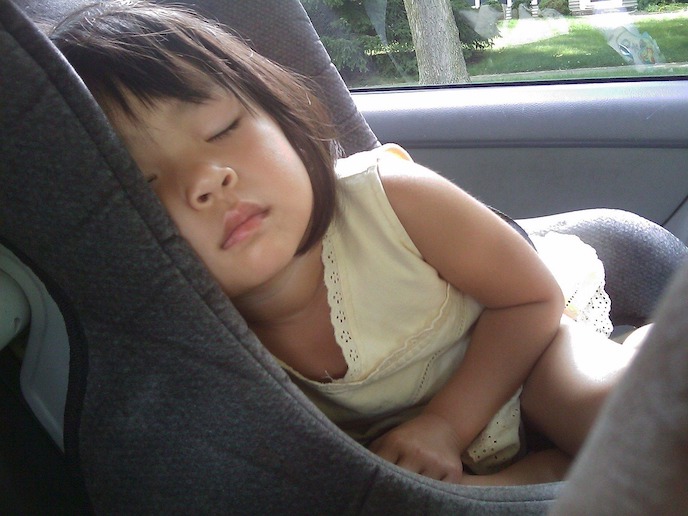
The American Academy of Pediatrics (AAP) wants parents to know that sleeping in their car seats when not in transport has significant risk and has caused an alarming number of deaths nationwide.

Dr. Jeffrey Colvin, the lead author of a study looking at risk for infants in car seats, found that “most of the deaths occurred when the car seat was being used as a sleeping device.” He further noted “It really appears that the deaths in these car seats occurred in the context where the car seat wasn’t being used for its purpose in transporting a child, but instead it was being used as a substitute for a crib or bassinet.”

The AAP study further noted that “compared with other deaths, deaths in sitting devices had higher odds of occurring under the supervision of a child care provider or babysitter (our italics) compared with a parent.”

Dr. Colvin told Today that while there is no definitive reason for the number of deaths in car seats, he suggested the angled position of the device might be a factor, as well as the straps and side padding that could potentially be a strangulation or suffocation risk. He also stressed that “before there is widespread panic every time a child falls asleep in a car seat, parents should absolutely not be concerned if their baby falls asleep during the usual time in transit.” Various experts have opinions as to how long it is safe for them to be sleeping during a car trip. Please discuss this with your pediatrician for their expert advice.
December 9, 2022
https://staging.savealittlelife.com/wp-content/uploads/2022/12/car-seat-in-the-house-by-glamamom-650x488-1.png 488 650 RichardP https://staging.savealittlelife.com/wp-content/uploads/2017/02/Save-A-Little-Life-logo.jpg RichardP2022-12-09 18:00:252022-12-09 18:00:25THE BIGGEST MISTAKE YOU CAN MAKE WITH A CAR SEAT
Automobile Safety

IS CAR SEAT SLEEPING DANGEROUS?

We’re all accustomed to seeing infants and toddlers nod off when traveling in a car. The question is, how safe is it?

Although their car seat is angled back a bit, you will have noticed that when they fall asleep their heads inevitably fall forward. This is considered to be safe since the amount of pressure on their airway isn’t sufficient to stop breathing.

That being said, safety experts have known for some time that prolonged sleep in a car seat poses the risk of impaired breathing. This is due to the amount of pressure that the infant’s head puts on the breathing passage in a “hyper-flexed” or head down position. Infants, in particular, have large heads and small, very weak neck muscles making it impossible to hold their head steady, especially during sleep. Consequently, their head will usually fall forward during a car ride which can apply unsafe pressure on the airway making breathing difficult.

But just how long is it safe for a baby to slumber in that position? There seems to be some disparity among experts but most of them recommend no longer than one hour due to the possibility of reduced oxygen, while others extend that time closer to two hours.

So, if you’ve just pulled into your driveway and your little one is fast asleep,  is it safe to let them sleep while you attend to other things?

Helen Arbogast, injury prevention manager at Children’s Hospital of Los Angeles, says no, especially for those under two years of age.  The reality is that car seats are not designed for infants or toddlers to sleep in safely for an extended period of time. Ultimately, infants and toddlers are safest when sleeping in a crib or bassinette.

One question parents often ask us is what precautions we suggest if they are taking a longer road trip. Expert opinion suggests that either you have someone in the back seat with the child who can stimulate the infant periodically and/or make more frequent stops.

Be sure to pose the question to your pediatrician during your next well-baby visit.

In a related issue, Congressman Tony Cardenas (D-Panorama City) sponsored the passage of the Safe Sleep for Babies Act which passed both the house and senate. (Finally, something they can agree on!) The bill issues strict guidelines for crib safety that all crib manufacturers are now required to follow.

Updated June 06, 2025.

August 4, 2022
https://staging.savealittlelife.com/wp-content/uploads/2022/08/vehicle-g56521bd01_1280-449x674-1.jpg 674 449 RichardP https://staging.savealittlelife.com/wp-content/uploads/2017/02/Save-A-Little-Life-logo.jpg RichardP2022-08-04 12:42:012025-06-13 13:28:36IS CAR SEAT SLEEPING DANGEROUS?
Automobile Safety, Pregnancy

SAFETY BELTS DURING PREGNANCY

Safety and good health in pregnancy is always a high priority. Lifestyle changes during this time often include modification in diet, exercise and adequate rest for the soon to be mom. We also take for granted the need to eliminate cigarette smoking and avoidance of alcohol and most other drugs.

Yet, other areas of concern still exist. For example, some women feel that is might be injurious to the developing fetus to wear a seatbelt while driving. This notion was looked into by the National Highway Safety Transportation Administration (NHTSA) and clear recommendations to pregnant women were made. Their findings stated “…there is no evidence that safety belts increase the chance of injury to the baby, uterus, or placenta, no matter how severe the collision.”

It turns out that the mother’s body provides the best cushioning (from the bones, muscles and organs) for her developing baby. Although true that the pressures of a seatbelt can briefly squeeze the baby in the amniotic sac, there is greater cause for concern. “The main risk to the baby is injury or death of its mother. Injuries and death to the baby are closely related to the extent of the injury sustained by its mother.”

HOW TO WEAR SAFETY BELTS DURING PREGNANCY

Lap belts, as well as the lap portion of a lap-shoulder harness combination, should be placed low, across the hips and over the upper thighs. They must lie snugly over the pelvis, one of the stronger bones of our body. Never place the belt over the abdomen.  Adjust the shoulder belt for a snug fit. If it cuts across your neck, reposition your car seat for a better fit.

It turns out that the mother’s body provides the best cushioning (from the bones, muscles and organs) for her developing baby. Although true that the pressures of a seatbelt can briefly squeeze the baby in the amniotic sac, there is greater cause for concern. “The main risk to the baby is injury or death of its mother. Injuries and death to the baby are closely related to the extent of the injury sustained by its mother.”

For More Information visit the NHTSA web site
www.nhtsa.gov

February 1, 2017
https://staging.savealittlelife.com/wp-content/uploads/2017/01/safety-belts-during-pregnancy.jpg 449 599 RichardP https://staging.savealittlelife.com/wp-content/uploads/2017/02/Save-A-Little-Life-logo.jpg RichardP2017-02-01 03:24:352017-05-05 14:13:31SAFETY BELTS DURING PREGNANCY
Automobile Safety, Heat Stroke, Injury Prevention

CHILDREN, AUTOMOBILES AND HEAT STROKE

A recently published article in the journal Pediatrics reminds us all that heat stress from enclosed vehicles can cause significant temperature rise and put infants & children at risk for hyperthermia.

The effects of high internal automobile temperatures takes young lives every year in the U.S. In 2016, the number of deaths from heat stroke rose in the pediatric population to 39. Previous averages per year have been running at 29 deaths per year.

Temperatures in enclosed automobiles can range from 134 to 154 degrees, and do so in a hurry. On average, temperatures tend to increase 3.2 degrees per minute and this is barely affected by having the window open a crack. These results are based on ambient temperatures outside of only 86 degrees. Southern California can easily exceed those numbers, and often does.

This is just a reminder to parents and care providers that small passengers are subject to heat stroke at a greater rate than adults, due to low body mass. It is imperative that we pay close attention to this issue and remind all others that might transport your infants and children in automobiles that passenger safety during the warmer months is everyone’s job.

February 1, 2017
https://staging.savealittlelife.com/wp-content/uploads/2017/01/children-automobiles-heat-stroke.jpg 449 599 RichardP https://staging.savealittlelife.com/wp-content/uploads/2017/02/Save-A-Little-Life-logo.jpg RichardP2017-02-01 02:38:032022-08-04 13:50:45CHILDREN, AUTOMOBILES AND HEAT STROKE
Automobile Safety

CAR SEAT RECOMMENDATIONS

The importance of child safety in vehicles cannot be ignored.

According to the National Highway Traffic Safety Administration (NHTSA,) 1 in 3 children (under the age of 13)  killed in car crashes died as a result of being unrestrained at the time of impact.

The NHTSA has specific guidelines regarding child seats in automobiles.

The following chart outlines the various recommendations which are calculated by age group:

NHTSA Car Seat Infographic

PRINT

FOR MORE INFORMATION on Child Safety in automobiles, visit the National Highways Transportation & Safety web site


Also, make sure you know what the car seat regulations are in your State


February 1, 2017
https://staging.savealittlelife.com/wp-content/uploads/2017/01/car-seat-recommendations-1.jpg 449 599 RichardP https://staging.savealittlelife.com/wp-content/uploads/2017/02/Save-A-Little-Life-logo.jpg RichardP2017-02-01 02:31:542018-04-27 12:29:54CAR SEAT RECOMMENDATIONS
Search Search

Upcoming Classes & Events

14 Jun

Family and Friends CPR & Home Safety (In Person Class) with the Pump Station & Nurtury – Santa Monica, CA

17 Jun

Family and Friends CPR & Home Safety (In Person Class) with the Pump Station & Nurtury – Santa Monica, CA

28 Jun

Family and Friends CPR & Home Safety (In Person Class) with the Pump Station & Nurtury – Santa Monica, CA

30 Jun

Family and Friends CPR & Home Safety (In Person Class) with A Mother’s Haven – Encino, CA

28 Jul

Family and Friends CPR & Home Safety (In Person Class) with A Mother’s Haven – Encino, CA

SITE NAVIGATION

  • HOME
  • ABOUT
    • SAVE A LITTLE LIFE
    • OUR TEAM
  • CLASSES
    • CERTIFICATION CLASSES
    • NON-CERTIFICATION CLASSES
    • CLASES EN ESPAÑOL
    • VIRTUAL CLASSES
  • FAQ
  • CALENDAR
  • GALLERY
  • SAFETY CORNER
  • SHOP
  • RESOURCES
  • CONTACT

FIRST AID KITS

Save A Little Life ™ FIRST AID KITS are a must-have for every household.

Each kit contains top quality hospital grade materials with instructions for use and an easy-to-use First Aid manual.

Available in three different sizes.

ORDER NOW

SMALL
MEDIUM
LARGE

First Aid Kit reviews

  • FAMILY FIRST AID KITS FAMILY FIRST AID KITS
    Rated 5 out of 5
    by Mike
  • FAMILY FIRST AID KITS FAMILY FIRST AID KITS
    Rated 5 out of 5
    by N. Phillips

SIGN UP FOR OUR NEWSLETTER

Shows the Save A Little Life logo - a brown teddy bear in front of a life buoy
(323) 394-4076

RESOURCES
TERMS OF USE
PRIVACY POLICY
SITE MAP
© Copyright SAVE A LITTLE LIFE 2026 - Site Design by: Great Spirited Productions
Scroll to top Scroll to top Scroll to top

Save A Little Life™ uses cookies to ensure you get the best experience on our website. By continuing to browse the site, you are agreeing to our use of cookies.

OK

Cookie and Privacy Settings


How we use cookies

We may request cookies to be set on your device. We use cookies to let us know when you visit our websites, how you interact with us, to enrich your user experience, and to customize your relationship with our website.

Click on the different category headings to find out more. You can also change some of your preferences. Note that blocking some types of cookies may impact your experience on our websites and the services we are able to offer.

Essential Website Cookies

These cookies are strictly necessary to provide you with services available through our website and to use some of its features.

Because these cookies are strictly necessary to deliver the website, refusing them will have impact how our site functions. You always can block or delete cookies by changing your browser settings and force blocking all cookies on this website. But this will always prompt you to accept/refuse cookies when revisiting our site.

We fully respect if you want to refuse cookies but to avoid asking you again and again kindly allow us to store a cookie for that. You are free to opt out any time or opt in for other cookies to get a better experience. If you refuse cookies we will remove all set cookies in our domain.

We provide you with a list of stored cookies on your computer in our domain so you can check what we stored. Due to security reasons we are not able to show or modify cookies from other domains. You can check these in your browser security settings.

Other external services

We also use different external services like Google Webfonts, Google Maps, and external Video providers. Since these providers may collect personal data like your IP address we allow you to block them here. Please be aware that this might heavily reduce the functionality and appearance of our site. Changes will take effect once you reload the page.

Google Webfont Settings:

Google Map Settings:

Google reCaptcha Settings:

Vimeo and Youtube video embeds:

Privacy Policy

You can read about our cookies and privacy settings in detail on our Privacy Policy Page.

PRIVACY POLICY
Accept settingsHide notification only