• Shopping Cart Shopping Cart
    0Shopping Cart
Save a Little Life
  • HOME
  • ABOUT
    • SAVE A LITTLE LIFE
    • OUR TEAM
  • CLASSES
    • CERTIFICATION CLASSES
    • NON-CERTIFICATION CLASSES
    • CLASES EN ESPAÑOL
    • VIRTUAL CLASSES
  • FAQ
  • CALENDAR
  • GALLERY
  • SAFETY CORNER
  • SHOP
  • RESOURCES
  • CONTACT
  • Menu Menu

Tag Archive for: Caregivers

CPR, Water Safety

WHAT YOU MAY NOT KNOW ABOUT DROWNING

Drowning is a major concern worldwide.

Water is a source of joy for children of all ages but it requires a high degree of respect and caution. 

These days drowning is newly defined as “submersion in a liquid” and doesn’t assume death which may be confusing. That is why the American Academy of Pediatrics (AAP), The Center for Disease Control (CDC) and the World Health Organization (WHO) all want us to have a better understanding not only of what it is, but how drowning can affect anyone, and how it impacts society.

Too often we assume that little ones are safe in water unless we hear a lot of splashing or a call for help but sadly, these responses rarely occur. Drowning is quick and silent. That is why it’s crucial that you be informed as to what actually happens when someone is in real trouble.  

Practicing life-saving skills is the responsibility of everyone involved in the care of your children. 

Save A Little Life™ works with all parents, family members, and trusted care providers regarding the risks, how drowning actually happens, and where it occurs.  We continue to emphasize the importance of drowning prevention and, of course, what we would need to do in the event of a real health emergency.  One thing we emphasize is that drowning victims can be saved if we recognize the problem and start CPR immediately.
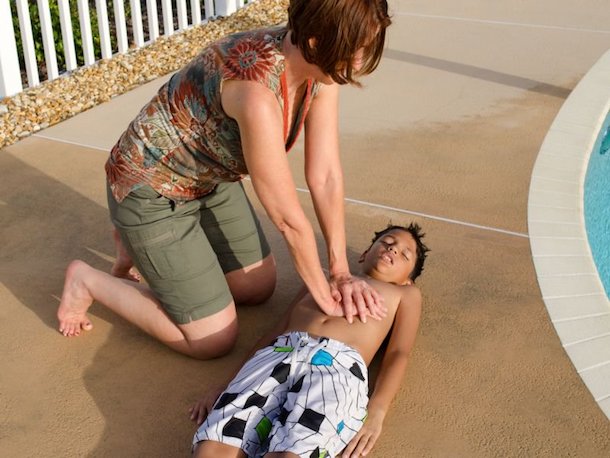
Below you’ll find the latest statistics on drowning. We encourage you to read them carefully with the understanding that our intention is not to scare you but to inspire you.

As we like to say, Be Informed. Be Prepared. Be Safe.

GENERAL STATISTICS:

  • There is an average of 4,012 unintentional drownings per year
  • Drowning remains among the top 4 causes of death from age 54 and up
  • Drowning is the single leading cause of death for children ages 1-4, and the second leading cause of injury-related death for children up to 14 years old
  • The U.S. averages 11 fatal drownings per day and an average of 22 non-fatal drownings per day
  • More than 40% of drownings treated in Emergency Departments require hospitalization, transfer or further care (compared with 8% of all unintentional injuries). Many of those who do not die will experience brain damage or other serious outcomes, often with long term disability
  • Drowning can occur in as little as 20-60 seconds
  • Nearly 80% of drowning deaths are among males due to increased exposure to water, risk-taking behavior and alcohol use

CHILD STATISTICS:

  • 88% of child drownings occur with at least 1 adult present
  • For every child that dies from drowning, another 7-8 require emergency department care for non-fatal drowning.  Nearly 70% of drownings of young children occur during non-swimming times
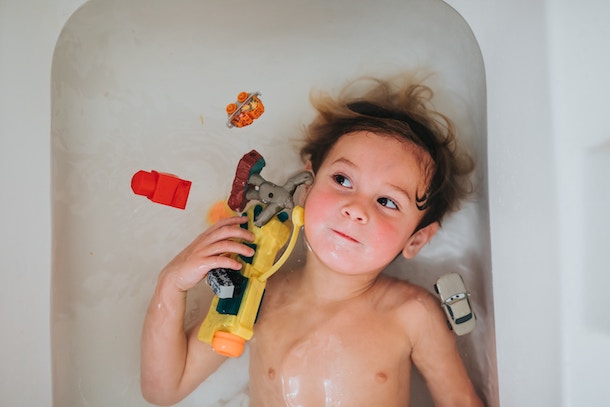
  • Two of three drowning incidents that take place in the home occur in a bathtub
  • 23% of child drownings happen during a family gathering near a pool
RACIAL AND ETHNIC GROUP STATISTICS:

  • Drowning deaths rates for Black people are 1.5 times higher than the rates for White people.  These disparities are highest among Black children  ages 5-9
  • In swimming pools, Black children ages 10-14 years drown at rates 7.6 times higher than White children
  • Black children are more likely to drown in public pools, and White children and youth in residential pools
  • Drowning rates for Native American or Alaskan Native people ages 29 and younger are 2 times higher than the rates for White people

STATISTICS FOR PEOPLE WITH DISABILITIES AND MEDICAL CONDITIONS: 

  • People with seizure disorders such as epilepsy are at a higher risk of fatal and non-fatal drowning than the general population  
  • Other conditions such as autism and heart conditions are also associated with a higher risk of drowning

Let us all be informed and prepared.  There is so much as stake.

March 31, 2023
https://staging.savealittlelife.com/wp-content/uploads/2023/03/sall-what-you-may-not-know-about-drowning-ge325dad10_1920.jpg 485 688 RichardP https://staging.savealittlelife.com/wp-content/uploads/2017/02/Save-A-Little-Life-logo.jpg RichardP2023-03-31 15:22:392023-03-31 16:18:06WHAT YOU MAY NOT KNOW ABOUT DROWNING
Fever, Seizures

LET’S TALK ABOUT SEIZURES AND HOW TO RESPOND TO THEM

If you’ve ever witnessed a person having a seizure, it’s likely that you’ve responded with fear or even revulsion. Or maybe you’ve simply felt helpless not knowing what to do.

So what do you do?

Film or TV portrayals of someone having a seizure might misinform you as to what the proper response actually is, and viewing seizures as evidence of demonic possession, while historical, is also likely to be misleading.

Let’s take a look at some basic facts.

Throughout the body there are electrical currents that facilitate many functions. This is especially true of the heart and brain. Sometimes an incident may occur where the current is short-circuited resulting in a seizure. The seizure itself is not the cause but the result of something, an event brought on by one of many possible causes.

Some possible causes are:

  • Use of alcohol and/or drugs
  • Flashing lights (like a strobe light)
  • Not taking medication prescribed to prevent seizures
  • Head injury where the brain is affected
  • Rapidly rising high fever in some babies and small children
  • A significant drop or rise in blood sugar levels
  • A brain tumor

DIFFERENT FORMS OF SEIZURES

Some seizures are short in duration while others last several minutes or longer.

A seizure may exhibit as rapid blinking or staring off into space.  Historically, these types of seizures have been called “petit mal” which are a less serious form.

When a seizure involves the whole body, causing shaking and altered consciousness, it is often referred to as “grand mal.”  

Some seizures only involve certain parts of the body causing involuntary twitching, confusion, and the inability to respond to someone.  

Keep in mind that having a seizure does not mean that a child has epilepsy.

Seizures resulting from rapidly rising, high fevers are the most common seizures seen in the pediatric population. These are referred to as febrile seizures. If you are a parent with infants, toddlers and/or small children it is important that you speak with your pediatrician about fever so you can learn how to treat it.  

ARE ALL SEIZURES A MEDICAL EMERGENCY?  

The short answer is NO. In relation to some of the causes listed above, however, some seizures may require a paramedic response.

For example, when…

  • seizures last more than 5 minutes
  • someone is injured during a seizure
  • a person is experiencing their first seizure
  • someone has breathing problems or the inability to walk normally after a seizure
  • the seizures don’t stop
  • they occur in water

FIRST AID RESPONSES TO A SEIZURE

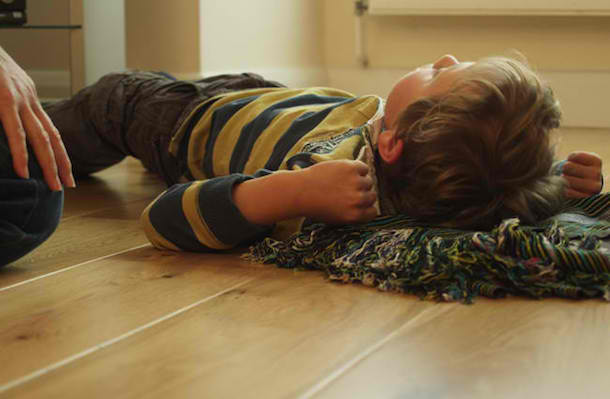
Shows a young boy lying on the floor in the aftermath of a seizure. A woman's hand resting on her leg can be seen to the left of him.

While someone is having a seizure…

  • do not try to restrain or hold them down during a seizure
  • do not put anything in their mouth
  • expect short periods of absent breathing, changes in skin color
  • do not start CPR or give rescue breaths
  • avoid giving the victim food or water

When someone is convulsing it is common for them to bite their tongue, cheek or lips, and bleeding can occur.  Do not panic if you see this.  Seizure victims DO NOT swallow their tongues.  

Stay with the victim until the seizure ends and the person fully awake is able to communicate normally. Many people will be confused afterward.

Speak softly to the victim.

Once a seizure begins to ease off, it is ok to carefully turn the person on their side.


March 30, 2023
https://staging.savealittlelife.com/wp-content/uploads/2023/03/save_a_little_life_lets_talk_about_seizures_and_how_to_respond_to_them_g58b092ad4_1920.jpg 485 688 RichardP https://staging.savealittlelife.com/wp-content/uploads/2017/02/Save-A-Little-Life-logo.jpg RichardP2023-03-30 14:43:082023-04-07 12:14:31LET’S TALK ABOUT SEIZURES AND HOW TO RESPOND TO THEM
Working Remotely from Home

7 STRATEGIES FOR SURVIVING REMOTE WORK WITH KIDS AT HOME

Working remotely might be the perfect fit for your career and family. Yet juggling childcare while getting work done can be challenging. With these survival tips from Save a Little Life in mind, you can breathe a little easier during the work week.

Dedicate an Area of Your Home to Work
Because working from home often involves mixing business and pleasure, a dedicated work area is a must. Separating work from daily living can help you focus and avoid distractions. A home office or nook can also create a work-life balance if you close it off at quitting time.

Aim to maintain an ergonomic work area, rather than working from bed or at the kitchen table. Proper posture is crucial for avoiding spine, wrist, and other injuries, notes Healthline; ergonomics matter when working from home.

Establish a Daily Routine or Rhythm
Most parents of young kids scoff at the idea of a “schedule.” What infant or toddler naps exactly when their caregiver needs them to? An alternative is a routine or rhythm that fits your family’s needs.

According to Parents magazine, routines are beneficial for kids and help bedtime go more smoothly, reduce meltdowns, and even teach toddlers flexibility. The exact times don’t matter, but a sequence of events keeps everyone on track.

Set Up Toddler-Safe Solo Activities
Managing a toddler while balancing a full workload isn’t easy. For times when you need to keep little hands busy, set up quiet toddler activities they can do solo. Making sure to avoid potential choking hazards is a no-brainer, but mess-free activities are a must, too.

Toys like blocks, puzzles, and coloring books can be intriguing, especially if they are new or not always available. Stickers, large magnets, and felt boards can also be engaging. Try to keep different toys in rotation to maintain interest, as novelty can wear off quickly.

Carve Out Time for Older Children
Working from home sometimes feels like working 24/7. It can also feel that way for your kids, especially older children who are mostly self-sufficient. Babies and toddlers require a lot of attention, but older kids need one-on-one time, too.

Take care to prioritize your older kids at important times of the day when your little ones aren’t underfoot.

Choose Clothing You Can Live In
An obvious benefit of working from home is the ability to wear comfortable clothes. Of course, if you need to be Zoom-ready on top, professional yet comfortable clothing is paramount.

Versatility is a keyword when it comes to comfortable, functional clothes.

Luckily, nursing parents can find top-rated nursing bras online, making it easy to add them to your shopping cart while ordering diapers and wipes.

Declutter Daily for Less Stress
Every parent knows how stressful having too much stuff is, but you might not realize how much clutter impacts your day. Mayo Clinic confirms that clutter can create stress and even keep you up at night.

Starting your day with a clean space can help you buckle down and get work done. Quick clutter pickups a few times daily can also help you feel accomplished. Try out a quick-clean routine to keep messes from piling up through the work week, and the mental load may ease even more.

Enjoy Downtime as “Me Time”
Though many parents feel guilty about dedicating time to self-care, Romper’s experts say it’s necessary. Carving out even a few minutes a couple of times per day can boost your mood and mental health.

Therapists say to take alone time to recoup, refresh, and be a more active parent when you are with your kids. Asking for help from your partner or family is recommended, too.

Remote work with a baby or toddler (or even older kids) isn’t easy, but it is doable. From setting up the right workspace to planning activities for little ones, lining things up takes effort but pays off when you hit deadlines and end the work week strong.


THANKS TO COLLEEN STEWART

from Play Date Fitness 

for contributing this article

December 14, 2022
https://staging.savealittlelife.com/wp-content/uploads/2022/12/helena-lopes-C2WC2ZerF3s-unsplash-650X433.jpg 433 650 RichardP https://staging.savealittlelife.com/wp-content/uploads/2017/02/Save-A-Little-Life-logo.jpg RichardP2022-12-14 18:58:372022-12-14 19:36:167 STRATEGIES FOR SURVIVING REMOTE WORK WITH KIDS AT HOME
Automobile Safety, Injury Prevention

THE BIGGEST MISTAKE YOU CAN MAKE WITH A CAR SEAT

The American Academy of Pediatrics (AAP) wants parents to know that sleeping in their car seats when not in transport has significant risk and has caused an alarming number of deaths nationwide.

Dr. Jeffrey Colvin, the lead author of a study looking at risk for infants in car seats, found that “most of the deaths occurred when the car seat was being used as a sleeping device.” He further noted “It really appears that the deaths in these car seats occurred in the context where the car seat wasn’t being used for its purpose in transporting a child, but instead it was being used as a substitute for a crib or bassinet.”

The AAP study further noted that “compared with other deaths, deaths in sitting devices had higher odds of occurring under the supervision of a child care provider or babysitter (our italics) compared with a parent.”

Dr. Colvin told Today that while there is no definitive reason for the number of deaths in car seats, he suggested the angled position of the device might be a factor, as well as the straps and side padding that could potentially be a strangulation or suffocation risk. He also stressed that “before there is widespread panic every time a child falls asleep in a car seat, parents should absolutely not be concerned if their baby falls asleep during the usual time in transit.” Various experts have opinions as to how long it is safe for them to be sleeping during a car trip. Please discuss this with your pediatrician for their expert advice.

December 9, 2022
https://staging.savealittlelife.com/wp-content/uploads/2022/12/car-seat-in-the-house-by-glamamom-650x488-1.png 488 650 RichardP https://staging.savealittlelife.com/wp-content/uploads/2017/02/Save-A-Little-Life-logo.jpg RichardP2022-12-09 18:00:252022-12-09 18:00:25THE BIGGEST MISTAKE YOU CAN MAKE WITH A CAR SEAT
Uncategorized

EMERGENCY CARE WITHOUT PARENTAL CONSENT

For years we have been telling parents that if someone other than you arrives with the baby or child (in your absence) that a form should accompany them. The form is known as the Parental Consent Form. This form, allows medical personnel to initiate care for your infant or child prior to your arrival at the hospital.

Examples of this potential conflict would be when a grandparent or aunt/uncle, babysitter, nanny, etc. brings the baby to the E.R. without a signed statement from the parent, allowing care to proceed until you arrive. This would provide the doctors & nursing staff with knowledge about the infant/child’s medical history (allergies, other health issues, medications). The assumption is that this information would clear the way to initiate treatment with medications, imaging studies, other necessary sedation of the baby or child for a wide variety of illnesses or injuries.

The American Academy of Pediatrics (AAP) has issued a new policy statement regarding these potential conflicts. The decision of the AAP for the revised policy on parental consent was summarized in this statement:

“Current medical ethics recommendations also appear to support the E.D./E.R. treatment of unaccompanied minors“ so the statement reads. Furthermore, the AAP statement included: “The physician should seek consensus from the patient or family as soon as possible.”

Simply put, this change suggests that preauthorization (with a note or letter, signed by the parent) is not a necessity and that proceeding with treatment of the minor will be based on a variety of factors.

When we instruct parents in our CPR and first-aid classes the issue of parental consent is always on our check-list of important things to do. We strongly suggest that all parents provide this document to those who have childcare duties, even those blood relatives who are not the parent or legal guardian of that minor.

Forms of this type are easily found on the internet and simply requesting a generic parental consent for medical treatment of a minor. Some states may have laws requiring notarization of the document. Not so in California.

September 5, 2017
https://staging.savealittlelife.com/wp-content/uploads/2017/11/Parental-Consent.jpg 449 599 RichardP https://staging.savealittlelife.com/wp-content/uploads/2017/02/Save-A-Little-Life-logo.jpg RichardP2017-09-05 17:27:142018-04-27 12:29:49EMERGENCY CARE WITHOUT PARENTAL CONSENT
CPR

NANNIES NEED A CPR AND FIRST-AID CLASS

Why Does My Nanny Need CPR and First Aid Training?

The question posed above is a good one. The answer I usually provide anyone who asks why their caregiver needs a life-saving course is: “Do we really have control over when bad events occur at home or anywhere else?” That answer suggests that parents stop and think about this issue. Their answer is usually self-evident. Of course we don’t.
Emergencies in the home have little or no warning as to when they will occur. This is why we emphasize the importance of two main areas: Prevention and, if and when needed, action.

The program offered by Save A Little Life ™ addresses and re-focuses on these two critical areas. The responsibilities we give our nannies/care-providers are awesome. They are not only your eyes and ears when parents are away from home, they really need the exact same understanding of how we prevent and, importantly when and how we act.

Simply and accurately put, they perform the most important job you will ever hire for. The vast majority of your home based help are smart, interested and utterly committed to your infant, toddler and child’s well-being. It is the parent’s job to make sure you are leaving your little ones in prepared hands.

First Aid and little ones

The first-aid component of the course is far more likely to be required. Cuts, bumps, splinters, head bonks and the like are quite common. Our experienced instructors review the most common of these incidents so that your nanny will be able to be decisive in their action. These actions may include:

* Responding to the more minor incidents noted above.
* Be able to understand when an injury, for example, needs the parent’s attention right away.
* Should be confident in explaining a situation that has occurred and do so succinctly and in a timely way.
* The competent use of first-aid supplies provided by the parent at home or elsewhere.
* Do their best to identify injuries or accidents that may require a visit to the E.R.
* Quickly identify higher risk concerns in or near your home where quick action may be needed to safeguard your small ones.

What we do

Save A Little Life ™ specializes in Pediatric CPR and First Aid for families and caregivers. Ask us about family discounts for those who have taken our class recently and need to have a caregiver trained too. Don’t wait!

Our next two certification courses are as follows:

Westside Nannies (En Espanol)
July 15, 2017
(Ask about our Special for this class, now through June 13, 2017!)
Westside Nannies (English)
July 22, 2017
Parents are welcome too, of course!

Have a safe and prosperous summer
Richard Pass, RN ,BS
Founder and Owner of Save A Little Life, inc.

July 11, 2017
https://staging.savealittlelife.com/wp-content/uploads/2017/07/save-a-little-life-why-nannies-need-a-cpr-and-first-aid-class.jpg 388 620 RichardP https://staging.savealittlelife.com/wp-content/uploads/2017/02/Save-A-Little-Life-logo.jpg RichardP2017-07-11 15:13:002022-12-14 19:19:06NANNIES NEED A CPR AND FIRST-AID CLASS
Basic First Aid

BASIC FIRST AID: A MUST FOR ALL

Having been very involved in both of my daughters’ extracurricular activities, I found that basic first aid is more than helpful, it’s a must!

In our case, my kids played soccer and softball, rode bikes, zoomed on skateboards and much more. On occasion, one or the other took a tumble from that bike or skateboard, bonked heads with another kid on the soccer field, got stung by a bee or got an accidental poke in the eye.

 Since we know that minor injuries occur with regularity for children of all ages, the question is: Are we ready with adequate first-aid supplies and do we know how to use them?

 Save A Little Life not only offers the highest quality in CPR training, but we are specialists in first-aid response and have an excellent basic first-aid class just for you.

Those who attend our first-aid course will learn the following skills:

•    How to control bleeding
•    How to manage a burn
•    How to stabilize a bad sprain or fractured bone
•    How to safely irrigate a wound or eye
•    The basics of bandaging wounds
•    Dealing with insect or animal bites
•    Response to poisonings
•    How to assist a victim of a seizure
•    How best to evaluate a head injury victim

Our First Aid course is a hands-on program where all participants work with real First Aid materials under the supervision of a trained critical care or emergency department R.N.

 Knowing how to respond to urgent care problems requires the ability to remain as calm and self-assured as possible. The goal of our program is to help you gain confidence in managing many of the minor to moderate injuries when and where they occur.

These classes are a must for all parents, family members and care providers.

Check our Calendar for upcoming classes, or contact us at (818) 344-1442.

And be sure to check out our Family First Aid Kits.

Regards,

Richard Pass, RN,BS

Director, Save A Little Life, Inc.

February 1, 2017
https://staging.savealittlelife.com/wp-content/uploads/2017/01/Basic-First-Aid.jpg 449 599 RichardP https://staging.savealittlelife.com/wp-content/uploads/2017/02/Save-A-Little-Life-logo.jpg RichardP2017-02-01 02:45:442018-07-24 11:48:54BASIC FIRST AID: A MUST FOR ALL
Search Search

Upcoming Classes & Events

17 Jun

Family and Friends CPR & Home Safety (In Person Class) with the Pump Station & Nurtury – Santa Monica, CA

28 Jun

Family and Friends CPR & Home Safety (In Person Class) with the Pump Station & Nurtury – Santa Monica, CA

30 Jun

Family and Friends CPR & Home Safety (In Person Class) with A Mother’s Haven – Encino, CA

28 Jul

Family and Friends CPR & Home Safety (In Person Class) with A Mother’s Haven – Encino, CA

25 Aug

Family and Friends CPR & Home Safety (In Person Class) with A Mother’s Haven – Encino, CA

SITE NAVIGATION

  • HOME
  • ABOUT
    • SAVE A LITTLE LIFE
    • OUR TEAM
  • CLASSES
    • CERTIFICATION CLASSES
    • NON-CERTIFICATION CLASSES
    • CLASES EN ESPAÑOL
    • VIRTUAL CLASSES
  • FAQ
  • CALENDAR
  • GALLERY
  • SAFETY CORNER
  • SHOP
  • RESOURCES
  • CONTACT

FIRST AID KITS

Save A Little Life ™ FIRST AID KITS are a must-have for every household.

Each kit contains top quality hospital grade materials with instructions for use and an easy-to-use First Aid manual.

Available in three different sizes.

ORDER NOW

SMALL
MEDIUM
LARGE

First Aid Kit reviews

  • FAMILY FIRST AID KITS FAMILY FIRST AID KITS
    Rated 5 out of 5
    by Mike
  • FAMILY FIRST AID KITS FAMILY FIRST AID KITS
    Rated 5 out of 5
    by N. Phillips

SIGN UP FOR OUR NEWSLETTER

Shows the Save A Little Life logo - a brown teddy bear in front of a life buoy
(323) 394-4076

RESOURCES
TERMS OF USE
PRIVACY POLICY
SITE MAP
© Copyright SAVE A LITTLE LIFE 2026 - Site Design by: Great Spirited Productions
Scroll to top Scroll to top Scroll to top

Save A Little Life™ uses cookies to ensure you get the best experience on our website. By continuing to browse the site, you are agreeing to our use of cookies.

OK

Cookie and Privacy Settings


How we use cookies

We may request cookies to be set on your device. We use cookies to let us know when you visit our websites, how you interact with us, to enrich your user experience, and to customize your relationship with our website.

Click on the different category headings to find out more. You can also change some of your preferences. Note that blocking some types of cookies may impact your experience on our websites and the services we are able to offer.

Essential Website Cookies

These cookies are strictly necessary to provide you with services available through our website and to use some of its features.

Because these cookies are strictly necessary to deliver the website, refusing them will have impact how our site functions. You always can block or delete cookies by changing your browser settings and force blocking all cookies on this website. But this will always prompt you to accept/refuse cookies when revisiting our site.

We fully respect if you want to refuse cookies but to avoid asking you again and again kindly allow us to store a cookie for that. You are free to opt out any time or opt in for other cookies to get a better experience. If you refuse cookies we will remove all set cookies in our domain.

We provide you with a list of stored cookies on your computer in our domain so you can check what we stored. Due to security reasons we are not able to show or modify cookies from other domains. You can check these in your browser security settings.

Other external services

We also use different external services like Google Webfonts, Google Maps, and external Video providers. Since these providers may collect personal data like your IP address we allow you to block them here. Please be aware that this might heavily reduce the functionality and appearance of our site. Changes will take effect once you reload the page.

Google Webfont Settings:

Google Map Settings:

Google reCaptcha Settings:

Vimeo and Youtube video embeds:

Privacy Policy

You can read about our cookies and privacy settings in detail on our Privacy Policy Page.

PRIVACY POLICY
Accept settingsHide notification only