• Shopping Cart Shopping Cart
    0Shopping Cart
Save a Little Life
  • HOME
  • ABOUT
    • SAVE A LITTLE LIFE
    • OUR TEAM
  • CLASSES
    • CERTIFICATION CLASSES
    • NON-CERTIFICATION CLASSES
    • CLASES EN ESPAÑOL
    • VIRTUAL CLASSES
  • FAQ
  • CALENDAR
  • GALLERY
  • SAFETY CORNER
  • SHOP
  • RESOURCES
  • CONTACT
  • Menu Menu
Fever, Seizures

LET’S TALK ABOUT SEIZURES AND HOW TO RESPOND TO THEM

If you’ve ever witnessed a person having a seizure, it’s likely that you’ve responded with fear or even revulsion. Or maybe you’ve simply felt helpless not knowing what to do.

So what do you do?

Film or TV portrayals of someone having a seizure might misinform you as to what the proper response actually is, and viewing seizures as evidence of demonic possession, while historical, is also likely to be misleading.

Let’s take a look at some basic facts.

Throughout the body there are electrical currents that facilitate many functions. This is especially true of the heart and brain. Sometimes an incident may occur where the current is short-circuited resulting in a seizure. The seizure itself is not the cause but the result of something, an event brought on by one of many possible causes.

Some possible causes are:

  • Use of alcohol and/or drugs
  • Flashing lights (like a strobe light)
  • Not taking medication prescribed to prevent seizures
  • Head injury where the brain is affected
  • Rapidly rising high fever in some babies and small children
  • A significant drop or rise in blood sugar levels
  • A brain tumor

DIFFERENT FORMS OF SEIZURES

Some seizures are short in duration while others last several minutes or longer.

A seizure may exhibit as rapid blinking or staring off into space.  Historically, these types of seizures have been called “petit mal” which are a less serious form.

When a seizure involves the whole body, causing shaking and altered consciousness, it is often referred to as “grand mal.”  

Some seizures only involve certain parts of the body causing involuntary twitching, confusion, and the inability to respond to someone.  

Keep in mind that having a seizure does not mean that a child has epilepsy.

Seizures resulting from rapidly rising, high fevers are the most common seizures seen in the pediatric population. These are referred to as febrile seizures. If you are a parent with infants, toddlers and/or small children it is important that you speak with your pediatrician about fever so you can learn how to treat it.  

ARE ALL SEIZURES A MEDICAL EMERGENCY?  
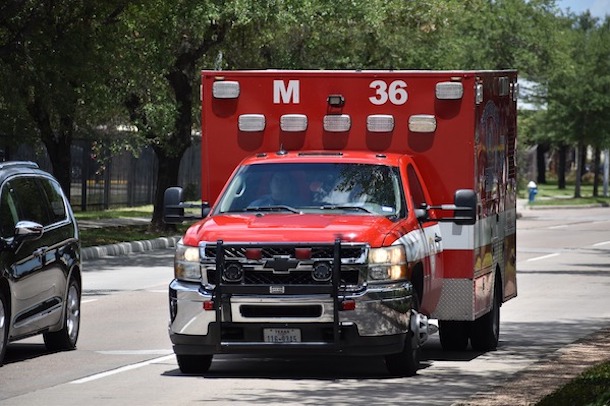
The short answer is NO. In relation to some of the causes listed above, however, some seizures may require a paramedic response.

For example, when…

  • seizures last more than 5 minutes
  • someone is injured during a seizure
  • a person is experiencing their first seizure
  • someone has breathing problems or the inability to walk normally after a seizure
  • the seizures don’t stop
  • they occur in water

FIRST AID RESPONSES TO A SEIZURE
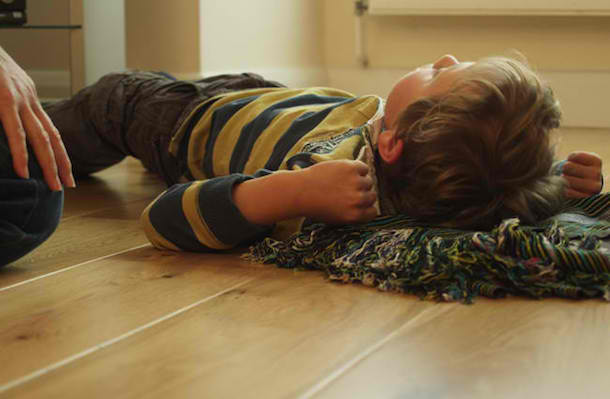
Shows a young boy lying on the floor in the aftermath of a seizure. A woman's hand resting on her leg can be seen to the left of him.

While someone is having a seizure…

  • do not try to restrain or hold them down during a seizure
  • do not put anything in their mouth
  • expect short periods of absent breathing, changes in skin color
  • do not start CPR or give rescue breaths
  • avoid giving the victim food or water

When someone is convulsing it is common for them to bite their tongue, cheek or lips, and bleeding can occur.  Do not panic if you see this.  Seizure victims DO NOT swallow their tongues.  

Stay with the victim until the seizure ends and the person fully awake is able to communicate normally. Many people will be confused afterward.

Speak softly to the victim.

Once a seizure begins to ease off, it is ok to carefully turn the person on their side.


March 30, 2023
https://staging.savealittlelife.com/wp-content/uploads/2023/03/save_a_little_life_lets_talk_about_seizures_and_how_to_respond_to_them_g58b092ad4_1920.jpg 485 688 RichardP https://staging.savealittlelife.com/wp-content/uploads/2017/02/Save-A-Little-Life-logo.jpg RichardP2023-03-30 14:43:082023-04-07 12:14:31LET’S TALK ABOUT SEIZURES AND HOW TO RESPOND TO THEM
Fever, Seizures

TYLENOL USE AFTER A FEBRILE SEIZURE

This article is a condensed version of several recent medical studies, representing their highlights and conclusions concerning Febrile Seizures (high fever) and the use of Tylenol afterward to prevent further seizure episode(s). We hope you find it relevant.

Febrile seizures are convulsions that can happen when a young child has a fever above 100.4°F (38°C). The seizures usually last for a few minutes and stop on their own, although the fever may continue for some time.

Tylenol (Acetaminophen) is a time proven safe fever reducer for infants and children.

Prior to this study it was widely believed that the administration of Tylenol was ineffective in preventing a second seizure after a first had already occurred.

This study involved infants & children from 6-60 months of age who visited the hospital after a febrile seizure. The use of Tylenol in these cases was compared with patients who received no medication after their seizure.

The dose of Tylenol given was 10mg. per kilogram (rectally) every 6 hours until 24 hours after the first seizure…if the fever remained greater than 100.4 (F).

Of the 423 patients in the study 219 received the Tylenol dose and 204 did not receive any medication for fever reduction. Results of the study showed that a recurrence of another seizure in the following 24 hours was significantly lower in the group that received Tylenol.

When administering Tylenol products at home it is important to follow accurate product dosing instructions unless your physician specifically asks you to alter the dose.

Given that there may still be some differences regarding treatment of infants or children after a febrile seizure it is important to speak with your pediatrician and/or emergency room physician should this event occur.

Your own pediatrician is always your first and best resource for diagnosis & treatment of all pediatric illnesses.

October 15, 2019
https://staging.savealittlelife.com/wp-content/uploads/2019/10/fever-check.jpg 449 599 RichardP https://staging.savealittlelife.com/wp-content/uploads/2017/02/Save-A-Little-Life-logo.jpg RichardP2019-10-15 12:18:152023-03-31 14:45:53TYLENOL USE AFTER A FEBRILE SEIZURE
Search Search

Upcoming Classes & Events

14 Jun

Family and Friends CPR & Home Safety (In Person Class) with the Pump Station & Nurtury – Santa Monica, CA

17 Jun

Family and Friends CPR & Home Safety (In Person Class) with the Pump Station & Nurtury – Santa Monica, CA

28 Jun

Family and Friends CPR & Home Safety (In Person Class) with the Pump Station & Nurtury – Santa Monica, CA

30 Jun

Family and Friends CPR & Home Safety (In Person Class) with A Mother’s Haven – Encino, CA

28 Jul

Family and Friends CPR & Home Safety (In Person Class) with A Mother’s Haven – Encino, CA

SITE NAVIGATION

  • HOME
  • ABOUT
    • SAVE A LITTLE LIFE
    • OUR TEAM
  • CLASSES
    • CERTIFICATION CLASSES
    • NON-CERTIFICATION CLASSES
    • CLASES EN ESPAÑOL
    • VIRTUAL CLASSES
  • FAQ
  • CALENDAR
  • GALLERY
  • SAFETY CORNER
  • SHOP
  • RESOURCES
  • CONTACT

FIRST AID KITS

Save A Little Life ™ FIRST AID KITS are a must-have for every household.

Each kit contains top quality hospital grade materials with instructions for use and an easy-to-use First Aid manual.

Available in three different sizes.

ORDER NOW

SMALL
MEDIUM
LARGE

First Aid Kit reviews

  • FAMILY FIRST AID KITS FAMILY FIRST AID KITS
    Rated 5 out of 5
    by Mike
  • FAMILY FIRST AID KITS FAMILY FIRST AID KITS
    Rated 5 out of 5
    by N. Phillips

SIGN UP FOR OUR NEWSLETTER

Shows the Save A Little Life logo - a brown teddy bear in front of a life buoy
(323) 394-4076

RESOURCES
TERMS OF USE
PRIVACY POLICY
SITE MAP
© Copyright SAVE A LITTLE LIFE 2026 - Site Design by: Great Spirited Productions
Scroll to top Scroll to top Scroll to top

Save A Little Life™ uses cookies to ensure you get the best experience on our website. By continuing to browse the site, you are agreeing to our use of cookies.

OK

Cookie and Privacy Settings


How we use cookies

We may request cookies to be set on your device. We use cookies to let us know when you visit our websites, how you interact with us, to enrich your user experience, and to customize your relationship with our website.

Click on the different category headings to find out more. You can also change some of your preferences. Note that blocking some types of cookies may impact your experience on our websites and the services we are able to offer.

Essential Website Cookies

These cookies are strictly necessary to provide you with services available through our website and to use some of its features.

Because these cookies are strictly necessary to deliver the website, refusing them will have impact how our site functions. You always can block or delete cookies by changing your browser settings and force blocking all cookies on this website. But this will always prompt you to accept/refuse cookies when revisiting our site.

We fully respect if you want to refuse cookies but to avoid asking you again and again kindly allow us to store a cookie for that. You are free to opt out any time or opt in for other cookies to get a better experience. If you refuse cookies we will remove all set cookies in our domain.

We provide you with a list of stored cookies on your computer in our domain so you can check what we stored. Due to security reasons we are not able to show or modify cookies from other domains. You can check these in your browser security settings.

Other external services

We also use different external services like Google Webfonts, Google Maps, and external Video providers. Since these providers may collect personal data like your IP address we allow you to block them here. Please be aware that this might heavily reduce the functionality and appearance of our site. Changes will take effect once you reload the page.

Google Webfont Settings:

Google Map Settings:

Google reCaptcha Settings:

Vimeo and Youtube video embeds:

Privacy Policy

You can read about our cookies and privacy settings in detail on our Privacy Policy Page.

PRIVACY POLICY
Accept settingsHide notification only